
What is the “Core,“ Anyway?
Here’s a pet peeve of mine: the word core.
All over social media, and in gyms all around the United States, people talk about strengthening their core. But here's the thing: the word core has no real meaning, anatomically speaking.
Sure, we all know the core vaguely means the middle of the body. For many, it conjures up social media images of perfectly toned six-packs. But I want to talk about the muscles in the middle that truly make a difference for strength, stability, and movement—what I consider the real core.
Six Pack vs. Stability
The visible “six pack” you might see on Instagram and TikTok, the rectus abdominis, helps you bend forward and contributes to your overall strength, but it’s not the driver of the kind of strength that helps your entire body function more easily.
When we talk about truly building strength in the middle of our bodies, what we’re really talking about is the deeper muscles in your pelvis and around your spine. These muscles work behind the scenes every time you walk, lift, reach, bend, or twist.
Building Pelvic Strength
Your pelvis is central to almost everything your body does: It absorbs the shock that travels through your legs from the ground when you walk. It gives large muscle groups like the glutes the mechanical advantage needed for running, jumping, and lifting. It’s where your center of gravity sits, and it’s the base of the column supporting your spine and most of your major organs.
With patients in the clinic with issues like lower back pain or balance problems, we work on three types of pelvic and spinal movement:
The sagittal plane: how your body moves forward and backward
The frontal plane: how your body moves from side to side
The transverse plane: how your body twists
One of my favorite metaphors for the pelvis, spine, and abdominal muscles is to think of your body like a sailboat. The hull of the boat is your pelvis. The mast is your spine. And the sails are the muscles that generate movement and power.
If the hull isn’t stable enough to withstand the waves, the sails have to work overtime just to keep the boat upright. And if the mast isn’t straight, the sails can’t direct the boat where it needs to go.
When the pelvis and spine provide a strong foundation, the rest of the body can move more efficiently with less strain.
What Does a Strong Core Do for Me?
A strong core isn't about visible abs. It’s about developing the muscles that power your body throughout the day. Every time you reach out of your center of gravity—to climb the stairs, pick up a bag from the floor, or reach something in a cabinet—the muscles around your pelvis and spine give you the power to do so.
The good news is, you don’t have to reach any particular fitness benchmark to benefit from exercising your pelvic muscles! Every time you challenge them, even a little bit, you’re helping your body become more resilient.
You can try these simple exercises at home to help build your pelvic muscles, increasing your overall strength and stability:
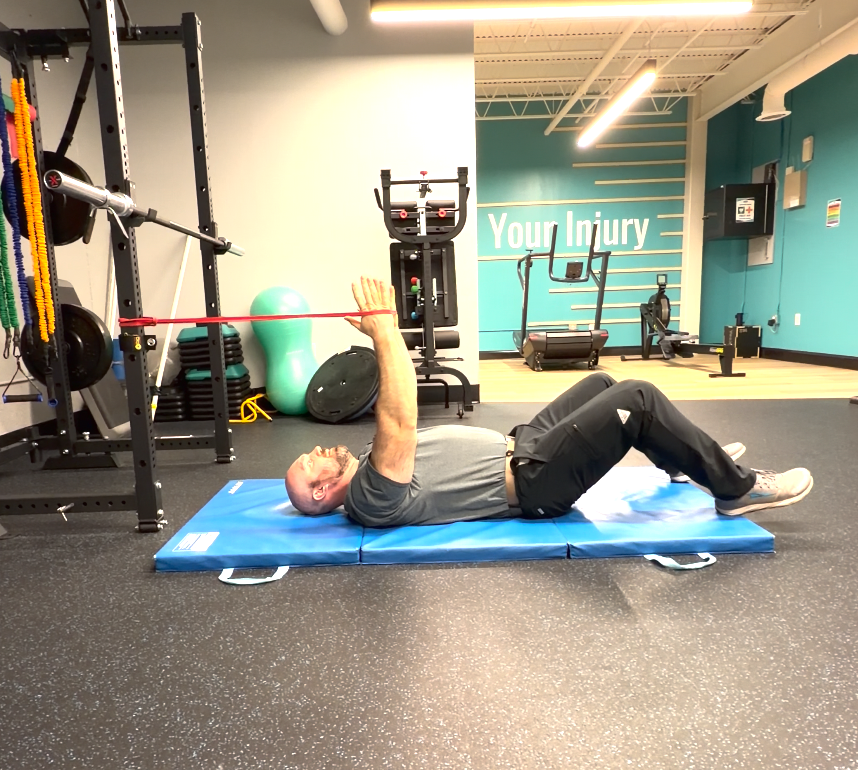
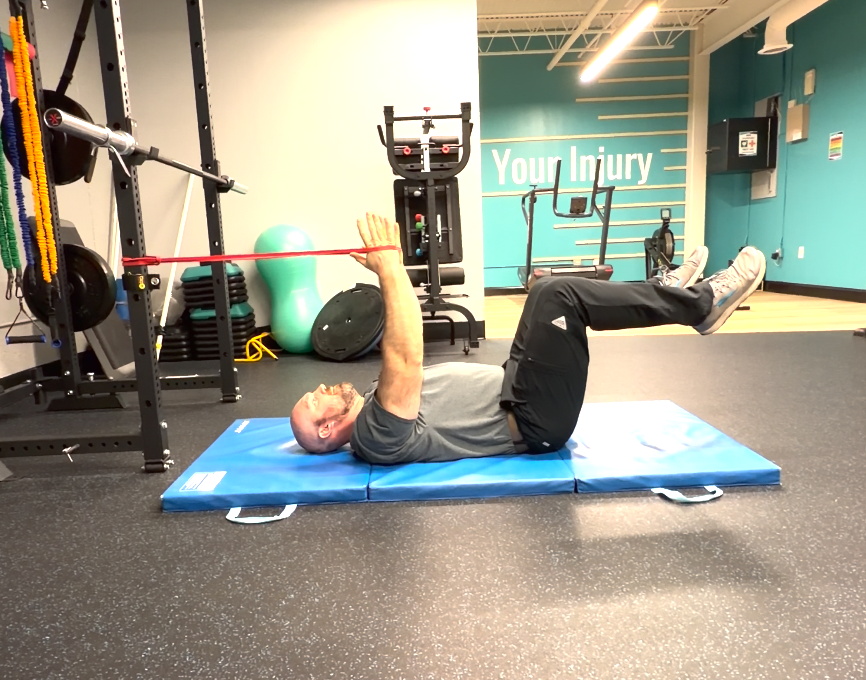
The “Dead Bug” (Sagittal Plane): Lie on your back with your hips and knees slightly bent and your arms reached overhead. Brace your abdominals, and raise your feet off the floor, bringing the knees to a 90 degree angle. Slowly lower your feet toward the floor while keeping your lower back gently pressed into the mat. Breathe steadily throughout the movement and avoid arching your back. Using a resistance band as pictured creates a stronger challenge for your pelvic muscles.
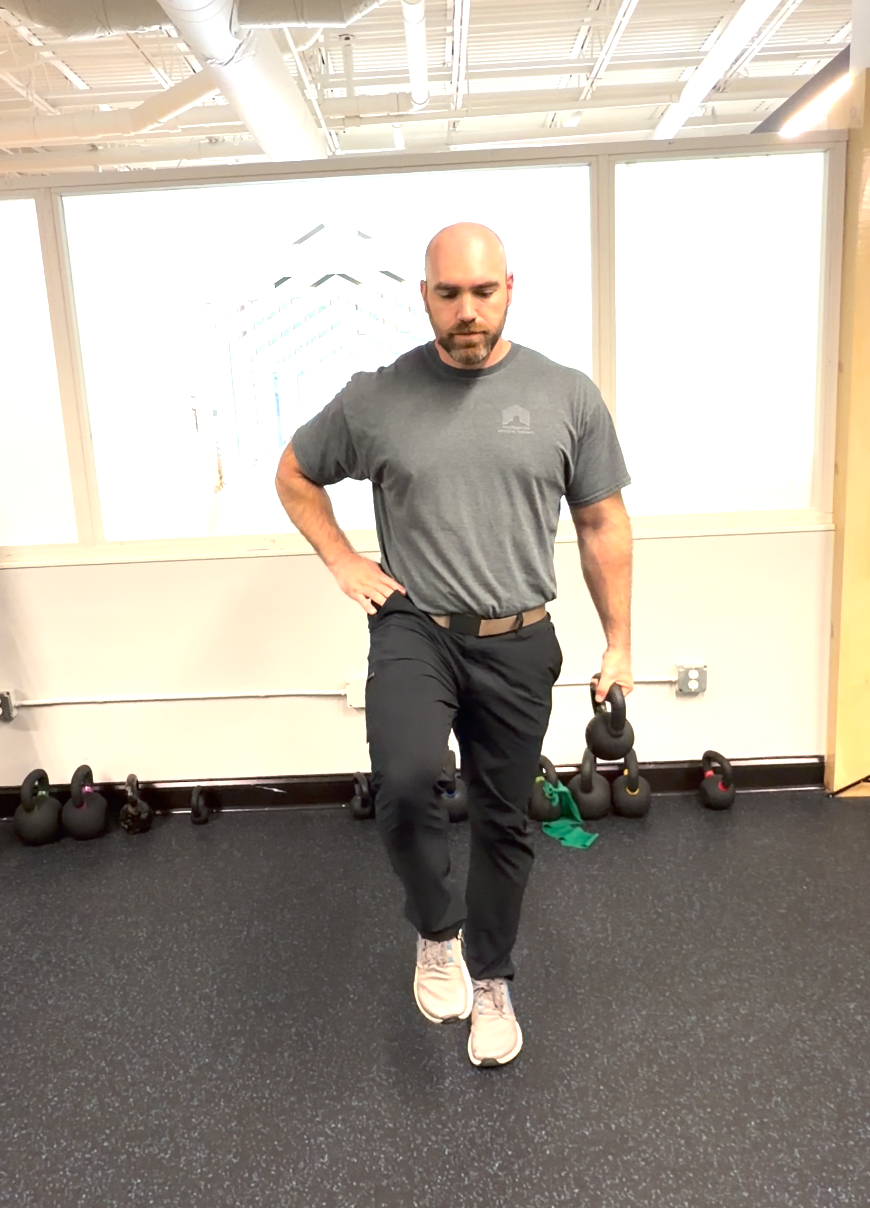
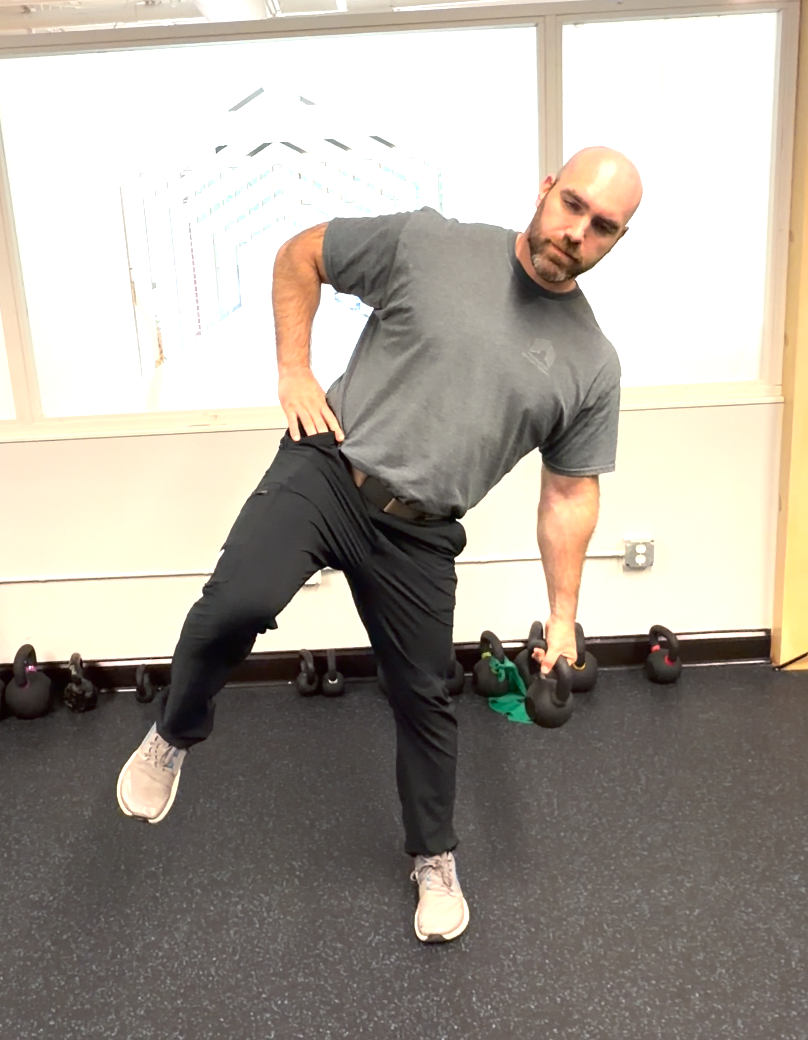
Single-Leg Lateral Hinge (Frontal Plane): Stand on one leg with the opposite foot lifted 4-6 inches off the floor. Holding a kettlebell or dumbbell in the hand of your stance-leg side, slowly lower the weight toward the floor by bending your hip like a hinge. Keep your trunk and pelvis moving together as one unit rather than bending through your lower back. Return to standing with control, maintaining your balance throughout.
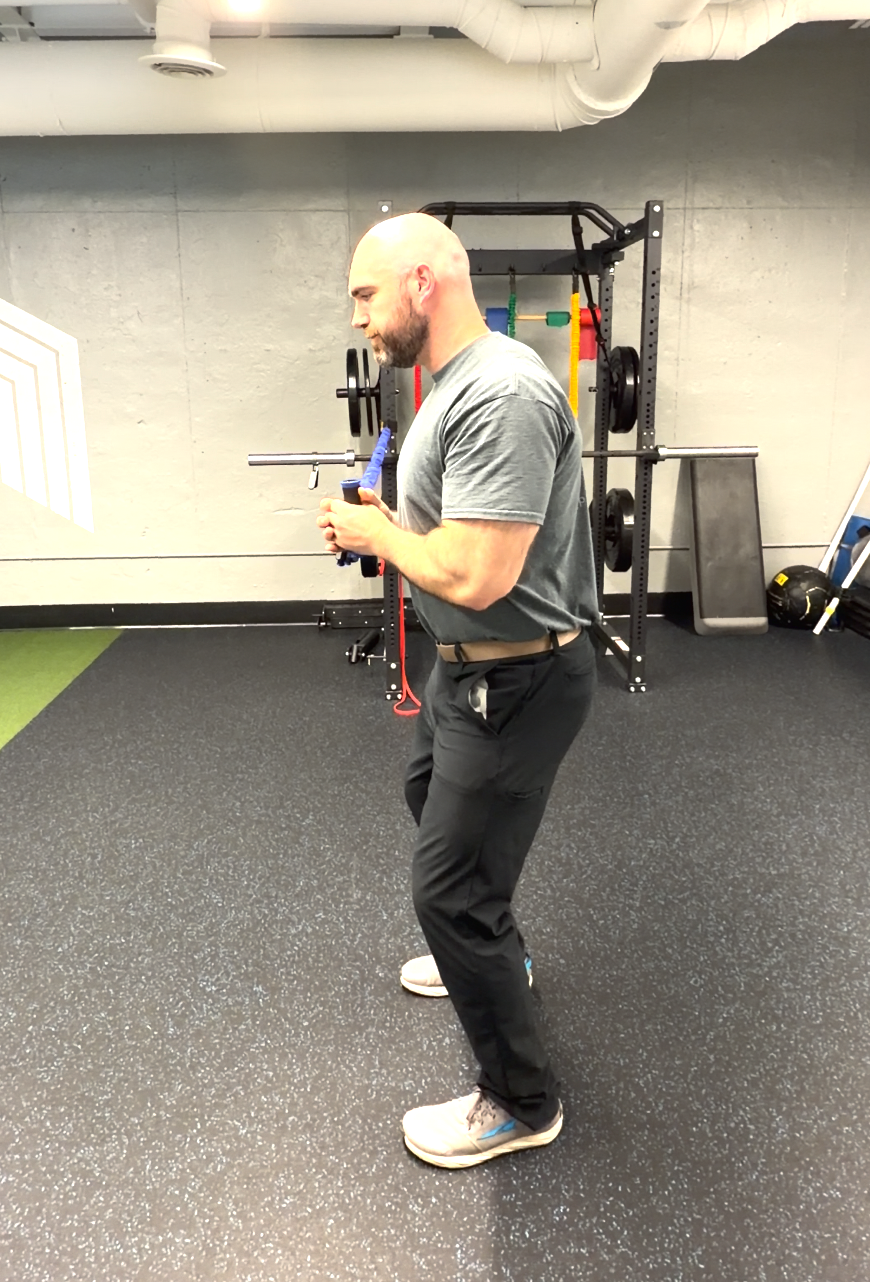
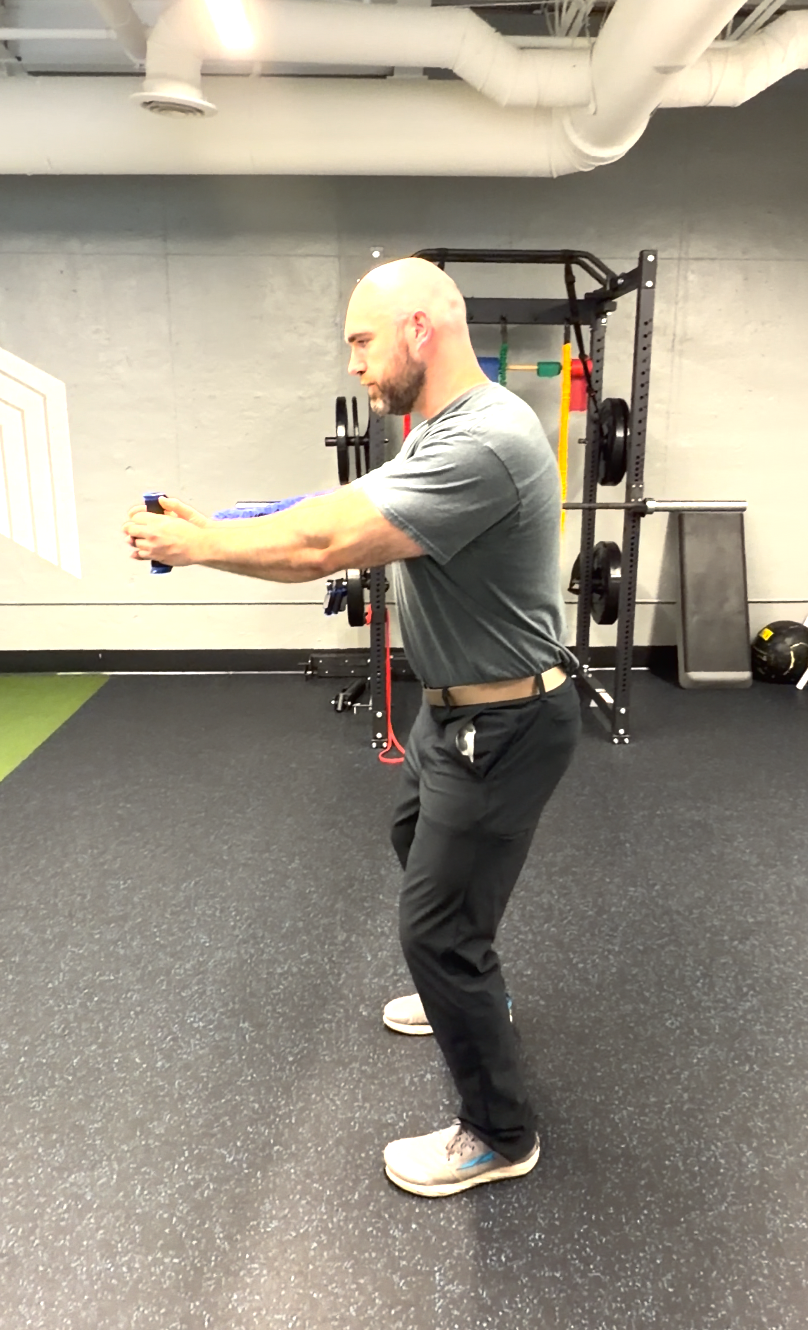
Pallof Press (Transverse Plane): Stand sideways to a resistance band or cable with your feet shoulder-width apart. Hold the handle at your chest with both hands, brace your core, and press your arms straight out in front of you. Resist the pull of the band by keeping your shoulders, hips, and torso facing forward without twisting. Pause briefly, then bring your hands back to your chest under control.